Here at Energy House Labs at the University of Salford, we are seeing first-hand how rising temperatures are impacting homes across the UK. As the country experiences record-breaking heat this June, our research is helping to understand how buildings respond—and what people can do to stay comfortable.
The UK has already recorded its hottest June day on record, reaching 36.1°C, exceeding a long-standing national benchmark. With sustained high daytime and night-time temperatures, overheating in homes is becoming an increasing concern for households nationwide.
Understanding overheating at Energy House 2.0
At the heart of our work is Energy House 2.0, our unique large-scale research facility. Opened in 2023, it is one of the largest building performance laboratories in the world, where we can recreate temperatures from below -23°C to above +50°C, alongside wind, rain, snow and solar radiation.
What makes the facility truly distinctive is that we build full-sized houses inside our environmental chambers. This allows us to test how real homes perform under extreme weather conditions, giving us precise, data-driven insights into overheating, energy use and comfort.
Our research into heatwave conditions
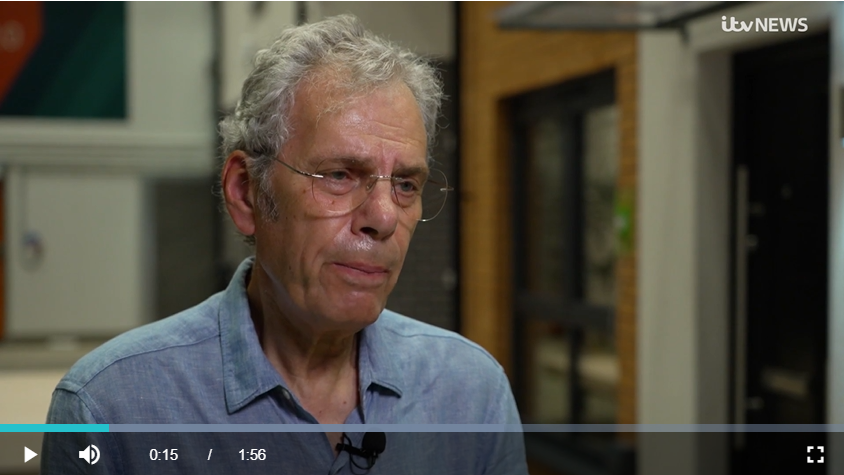
Professor of Energy & Buildings, Lubo Jankovic, has been using Energy House 2.0 over recent months to simulate overheating scenarios during heatwaves. By recreating extreme summer conditions within the chambers, we are able to analyse how heat builds up inside homes—and, crucially, how it can be reduced.
Based on this research, Professor Jankovic has developed practical guidance that households can use immediately during hot weather.
Our top ten tips for keeping your home cool
Drawing on our testing at Energy House 2.0, we recommend the following:
- Ventilate at the right time Keep windows open while internal temperatures are below 22–23°C and the outside air is cooler—especially overnight—to purge heat. Close them as external temperatures rise.
- Create cross-ventilation Open windows on opposite sides and across levels of your home to encourage airflow and a “chimney effect”.
- Reduce solar gain Use blinds, curtains or shutters during the day to block direct sunlight.
- Optimise shading systems If you use louvre shading, angle blades downwards to intercept solar radiation effectively.
- Use fans when sealed When windows are closed, fans help maintain air movement and improve comfort.
- Follow the coolest rooms Move to north-facing or ground floor rooms, which typically stay cooler than upper floors or south-facing spaces.
- Dress for the conditions Lightweight, breathable clothing can significantly improve comfort indoors.
- Adapt activity levels Avoid strenuous activity during the hottest parts of the day.
- Use evaporative cooling Keeping your skin slightly moist can help the body cool through evaporation.
- Consider cooling options carefully Some heat pumps can be adapted for cooling, but this may require system changes and careful management of condensation.
Shaping homes for the future
Our work at Energy House Labs is not only about responding to today’s heatwaves, but preparing homes for a warmer future. The built environment is responsible for around 40% of the UK’s carbon emissions, meaning improving building design is vital for achieving net zero targets.
At the same time, many UK homes were designed to retain heat, not release it—making them vulnerable during periods of extreme warmth. Through controlled testing in Energy House 2.0, we are working with industry partners to develop solutions that keep homes both energy-efficient and resilient to climate change.
As temperatures continue to rise, our research is helping ensure that homes of the future will not only be low carbon, but also safe, comfortable places to live year-round.
Catch Professor Lubo Jankovic discussing this work on ITV News.