BEAMA Energy House Heating Control Tests
Air Source Heat Pump Performance with Thermostatic Radiator Valves (TRV)
TRVs are often omitted from air source heat pump (ASHP) installations because of concerns that they may reduce efficiency and increase space heating energy use. This open-circuit design approach relies on accurate system sizing and weather compensation settings. This approach also limits the ability of occupants to control internal temperatures and increases the risk of overheating. BEAMA commissioned
testing at the Energy House to assess how limiting room temperatures with TRVs impacts ASHP efficiency and energy use.
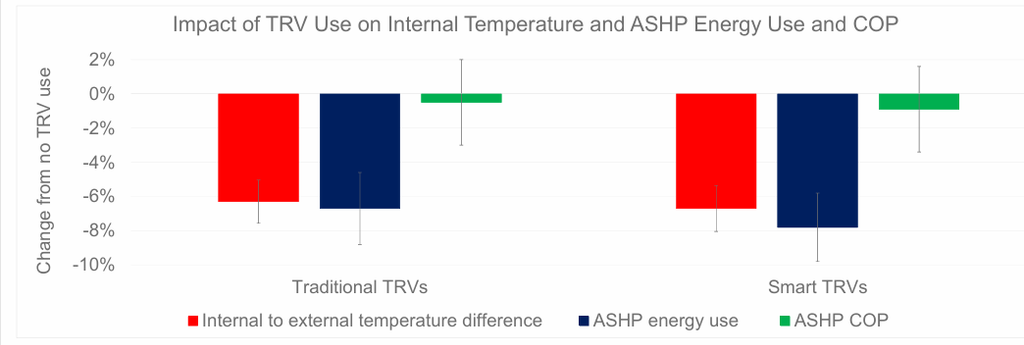
The temperature of three rooms in the Energy House, representing 43% of the dwelling volume, was reduced by an average of 2 °C using TRVs. This delivered winter day space heating energy savings of 7% and 8% for traditional and smart TRVs, respectively, with no measurable impact on ASHP COP (efficiency). The findings suggest that TRVs can provide occupants with greater control over
internal temperatures and reduce ASHP space heating energy use
“Our latest research with Salford is clearly an important step forward towards establishing the potential for zone control with heat pumps. We started this journey with last year’s (2024) guide to demonstrate how to interpret building regulations, but these research findings now mean that installers can confidently specify TRVs with heat pumps, providing their customers with the zone control benefits they have been conditioned to expect with traditional gas boilers.
It’s another step towards normalising heat pump systems in the eyes of customers whilst maximising energy efficiency benefits and improving comfort.”
Kelly Butler, BEAMA’s Director of External Affairs