Future Homes Project (2023-2026)
With a further £1.4m of support from the UK’s innovation agency, Innovate UK, the Future Homes project has been extended until 31 March 2025 with the aim to continue the work undertaken over the last two years, further develop our research themes, and provide further assistance to innovators in bringing even more novel low or zero technologies to market.
Led by Innovate UK on behalf of UK Research and Innovation, the pilot Innovation Accelerators programme invested £100m in 26 transformative R&D projects between 2022-25 to accelerate the growth of three high-potential innovation ecosystems – Glasgow City Region, Greater Manchester, and West Midlands. The programme was boosted by an additional £30m of public funding for 2025/26 spread equally across the regions. Innovation Accelerators is piloting a new model of R&D decision making that empowers local partnerships to harness innovation to drive regional economic growth, attract private investment, and develop future technologies.
This phase of the project will be delivered in partnership between Barratt Redrow, Bellway Homes, the Energy Innovation Agency, Red Co-operative, RSK Environment, Saint-Gobain, The University of Manchester, and The University of Salford. Central to the project are the unique research and testing facilities at The University of Salford.
The following themes will continue as part of the Future Homes project.
New Build and Retrofit
We will continue our applied research and innovation programme across both new build and retrofit housing, recognising that many technologies and challenges overlap across these sectors. The focus is on accelerating the deployment, evaluation, and integration of low‑carbon products and systems to support the delivery of net‑zero homes.
Innovators will be able to continue to access academic expertise and the unique facilities at the University of Salford’s Energy House Labs to test and verify their technologies. The aim is to support innovative products that are at Technology Readiness Levels 4-6 and to accelerate their development and progress towards market launch.
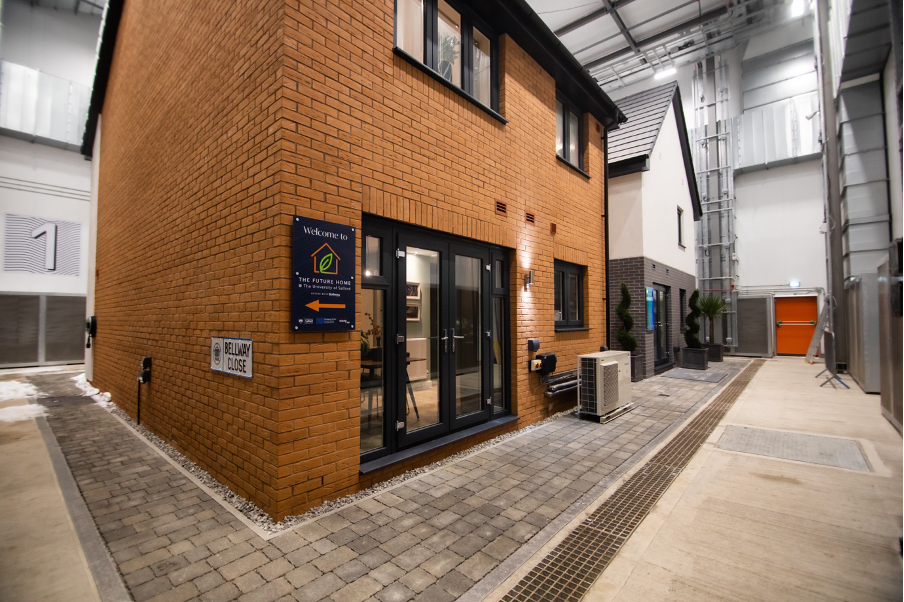
We will look to expand on research we undertook in phase one, and look at improving designs, installation and performance outcomes for heating, controls, fabric and delivery processes. As well as exploring how households can use smart meter infrastructure to provide energy flexibility and the consequences of overheating.
Related Publications:
- Energy House 2.0 Study on Future Homes Standard Heating Systems
- Vector Homes Baseline Fabric Performance Report of “Vector V1 Prototype Studio”
- Conservatory Fabric Report
- Experimental testing of heat pump systems for domestic hot water use in a Future Homes Standard house under controlled environmental conditions
- Bellway Homes” The Future Home” Baseline Performance Report
- Saint Gobain & Barratt Developments “eHome2” Baseline Performance Report
- Experimental and computational assessment of an energy-saving innovation in a customised testing cabin
- A Study Into The Insulative Effects Of Snow On Flat Roofs Under Extreme Conditions
- Experimental testing of heat pump systems for domestic hot water use in a Future Homes standard house under controlled environmental conditions
- A comparison of SAP Assumptions Vs Measured U-value and Airtightness in Pre-1919 Dwellings. A case Study Approach
- A Comparative Analysis of Solar Thermal and Photovoltaic Systems with Heat-Pump Integration in a New-Build House Under Controlled Conditions
- Building Performance Evaluation of The Energy House 2.0 Research Facility
- Using thermography to map U-values in homes: a case study of the Heat3D system in controlled conditions
- Heat Transfer Coefficient of a Building: A Constant with Limited Variability or Dynamically Variable?
- Challenges for circular economy in the construction industry
- York ASHP Report
Standards:
- EN 17887 1:2024: Thermal performance of buildings – In situ testing of completed buildings – Part 1: Data collection for aggregate heat loss test.
- EN 17887 2:2024: Thermal performance of buildings – In situ testing of completed buildings – Part 2: Steady-state data analysis for aggregate heat loss test.
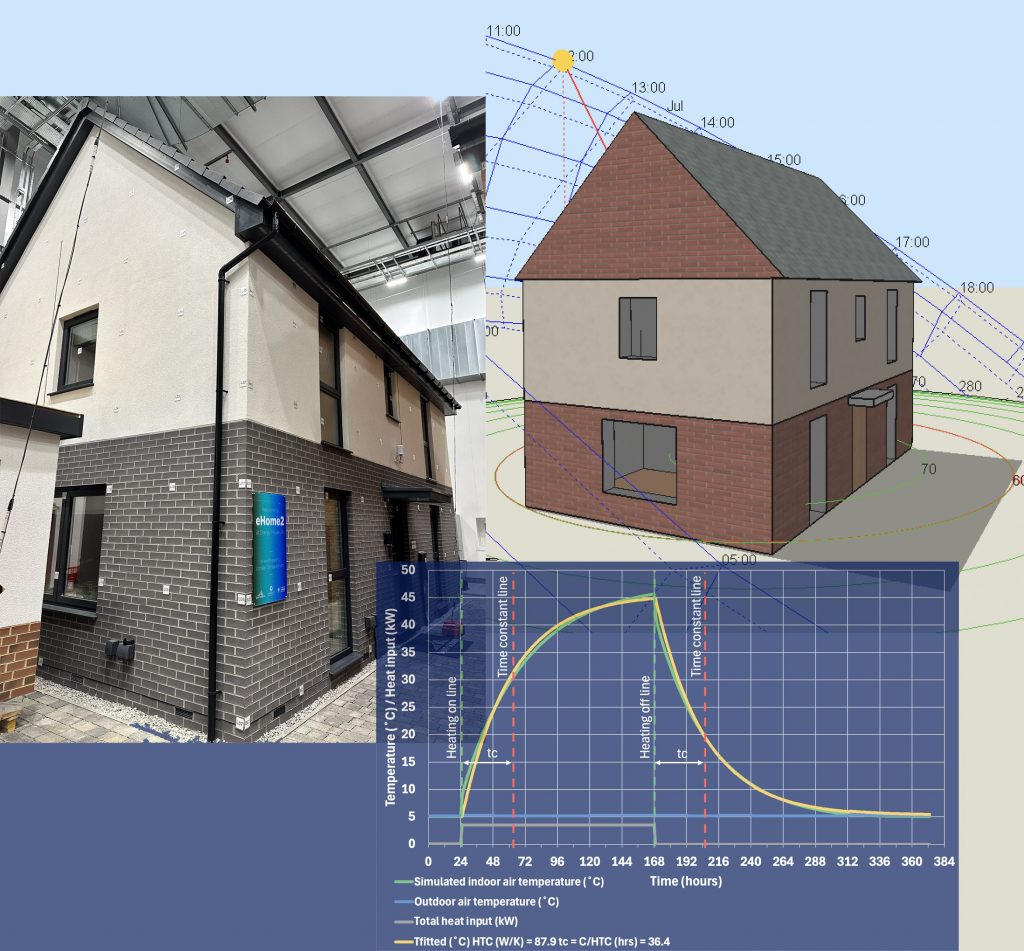
RSK Environment will continue to provide support with the development of digital packages relating to the work undertaken in this area. This will allow a rapid evaluation of the energy/carbon saving potential of any new technology, and to allow calibration of the digital energy models with the Energy House 2.0 test results.
Related Modelling Publications:
- Calibration of Building Performance Simulations for Zero Carbon Ready Homes: Two Open Access Case Studies Under Controlled Conditions
- A Multi-Objective Design Optimization of a New Build Future Home Standard House in Controlled Conditions
- Assessing Building Performance in A Low Carbon Home: A comparative study of the energy modelling representing design and as-built phase
- Dataset for article:” Calibration of Building Performance Simulations for Zero Carbon Ready Homes: Two Open Access Case Studies in Controlled Conditions”
- Experimental data-informed modelling of the thermal characteristics of a point connection with and without structural thermal breaks
Air Quality
The Centre for Atmospheric Science at The University of Manchester will continue to support with their expertise in indoor air quality, furthering their research on this increasingly important issue as mechanical ventilation becomes more common in homes, with novel emerging pollution sources associated with new building materials and construction techniques.
The work includes four areas of research:
- Assessing ventilation methods and products – evaluating how different ventilation technologies and strategies perform in homes with higher levels of airtightness.
- Tracking movement of volatile organic compounds (VOCs) – Measure and model how VOCs move through multi‑room layouts, particularly in tighter, modern buildings.
- Measure emissions from building materials under future climate conditions – Explore how increased ambient temperatures expected under future climate scenarios affect indoor air quality
- Evaluating Ventilation System Performance in High‑Temperature Outdoor Conditions – Study how different ventilation systems behave during hot outdoor conditions.
Acoustics
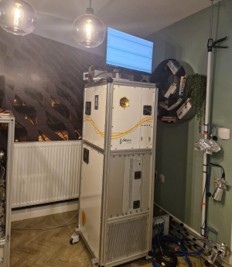
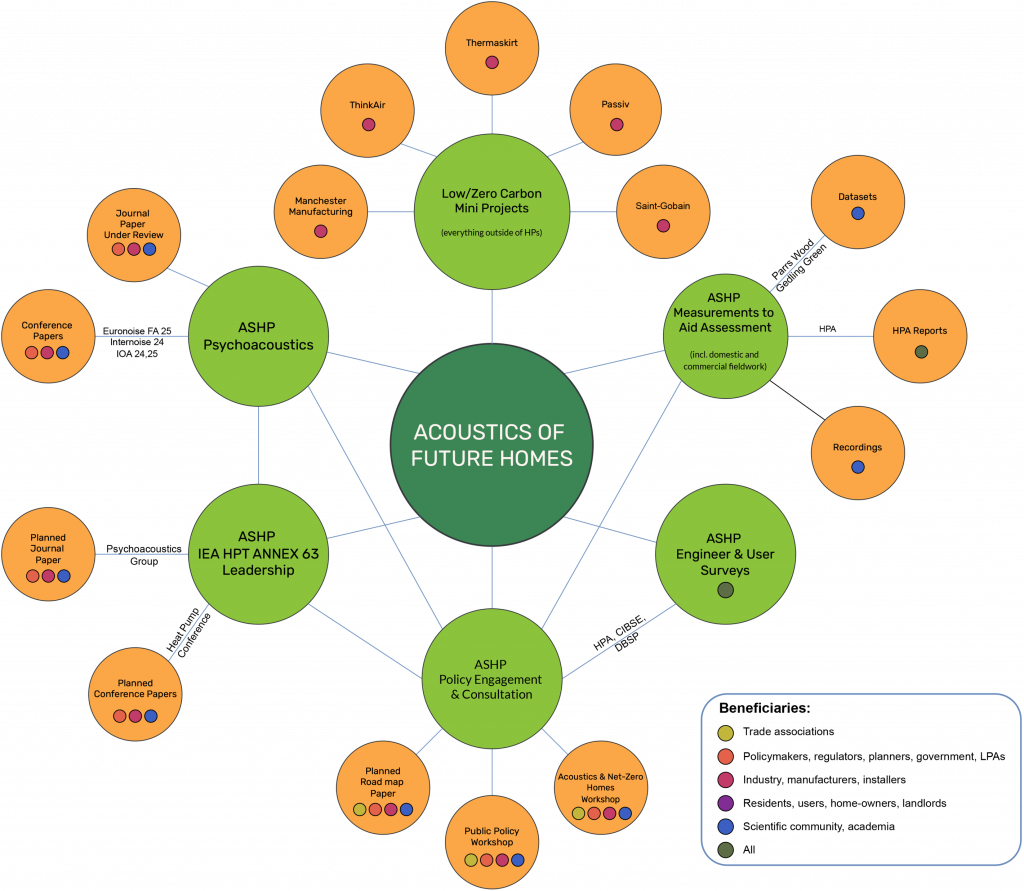
The Acoustics research team at the University of Salford will further their exploration of noise issues associated with Air Source Heat Pumps, including field testing to understand the real impact of noise on occupants. They will host a UK-wide policy workshop to industry collaborators. Along with providing assistance to a number of businesses on this topic and developing their research further.
Related Publications:
Digital Delivery
Red Co-operative are continuing the work within this area to further develop a rapid digital assessment tool for retrofit. Using a suite of data input sources such as historical energy performance, geographical location, building type, physical surveys, etc., the aim is to develop a user-friendly app that provides an integrated retrofit solution for any household.
Innovation Support
The Energy Innovation Agency will continue to work with small and medium sized businesses to accelerate product development by providing a roadmap to commercialisation together with in-depth advice and support on key issues such as funding, investment, sales, and marketing. They will also link innovators with the technical support at the facilities available at the University of Salford.
Lessons Learned
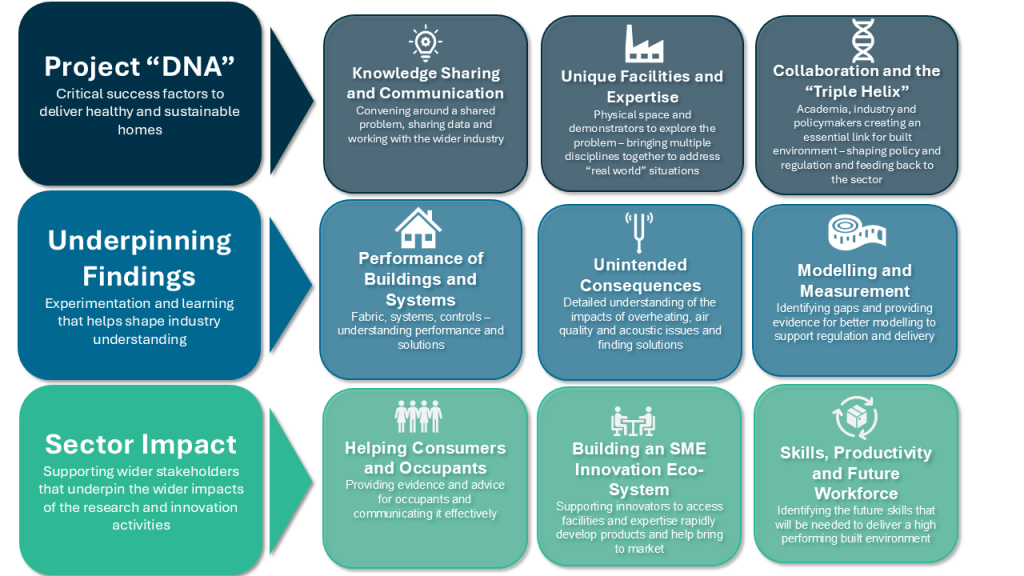
The project demonstrated that delivering high-performing, healthy homes requires whole-system thinking. Key lessons include:
- Open data, clear communication, and cross-sector collaboration significantly accelerate innovation and market confidence.
- Interdependencies between energy efficiency, ventilation, acoustics, overheating, and IAQ must be addressed collectively rather than in isolation.
- Real-world modelling must be better aligned with measured performance, requiring higher-quality product data and improved modelling methodologies.
- Customer-facing technologies—particularly smart home systems—must be simplified to ensure user benefit and reduce complexity.
Key Impacts
Accelerated Research & Innovation: Energy House 2.0 enabled high-speed, iterative testing under controlled climatic conditions, compressing research timelines and providing robust, actionable data for industry.
Industry-wide Collaboration: Competitors and supply-chain partners shared data openly, jointly funded research, and adopted unified approaches—creating a model of collaboration rarely seen in the sector
Evidence-Based Insights:
- Off-site timber frame systems demonstrated predictable fabric performance and reduced the performance gap.
- Heating system trials showed all technologies can work effectively but emphasised the critical importance of correct sizing, design, commissioning, and continuous-heating regimes for low-temperature systems.
- Indoor air quality studies revealed significant risks in airtight homes without active ventilation andhighlighted the need for regulatory evolution.
- Overheating studies validated the requirement for mechanical ventilation and informed mitigation strategies for future climate conditions.
- Acoustics research offered new understanding of heat-pump noise perception, informing emerging standards and installer guidance.
SME and Ecosystem Development: Over 10,000 visitors and strong partnership working created a pipeline for SME engagement, technical development, and commercialisation—including direct adoption of innovations by major buyers.
Policy Influence: Findings supported regional and national policymakers across areas such as retrofit, Home Energy Model development, heat pump regulation, and air-quality guidance.
Skills & Workforce Insights: Research highlighted changing skills needs associated with modern construction methods, electrification of heating, and new commissioning practice
Phase 1 – 01 Apr 2023 to 31 Mar 2025
The initial phase of the project included £3.54m of support from the UK’s innovation agency, Innovate UK, and over the last two years, project has supported innovators with 52 product evaluations and business assists to assist with the aim to accelerate the ability to bringing novel low or zero technologies to market.
Phase 1 of the project has been delivered by a partnership between Barratt Redrow, Bellway Homes, the Energy Innovation Agency, Q-Bot, Red Co-operative, RSK Environment, Saint-Gobain, The University of Manchester, and the University of Salford. Central to the project are the unique research and testing facilities at the University of Salford.
There are several themes to the Future Homes project represented through a number of ‘Work Packages’ which have included:
New Build & Retrofit
41 Business Assist/Product Evaluations have been undertaken across Energy House 1, Energy House 2.0, and the Acoustics Lab. Of these, 83% of the beneficiaries were companies who have not worked with the University of Salford in the past. Five new build partners have been engaged with. Research on air quality has been undertaken and will continue into the extension phase of the project, along with our acoustics work on heat pump noise.
Case studies of research collaborations under this Work Package include:
RSK Environment have played a key role so far by building ‘digital twins’ of the Barratt Redrow/Saint-Gobain and Bellway houses that are currently in Energy House 2.0, with datasets now available to the public to access on these properties.
Digital Delivery
Red Co-Operative and Q-Bot undertook work to develop a rapid digital assessment tool for retrofit. Using a suite of data input sources, such as historical energy performance, geographical location, building type, physical surveys, etc. The aim is to develop a user-friendly app that provides an integrated retrofit solution for any household. As this is such a large project, this development work will continue into the extension, however this will be solely led by Red Co-operative.
Material Sustainability
The Sustainable Material Innovation Hub at The University of Manchester and the University of Salford provided innovators with the following assistance:
- Material properties evaluation
- Technical guidance
- Life cycle assessment of products and processes
This type of assistance has helped the innovators involved become market ready and has fostered long-term partnerships. As well as assisting the heritage sector, it has helped in understanding how these new technologies can be applied to heritage buildings to hopefully encourage widespread adoption in retrofitting heritage or listed buildings in the future.
Innovation Support
The Energy Innovation Agency have worked with a number of small and medium-sized businesses to assist with the acceleration of their product development by providing a roadmap to commercialisation, together with in-depth advice and support on key issues such as funding, investment, sales, and marketing. They have also provided assisted with linking 24 organisations with the facilities at Energy House Labs and Acoustics to discuss and receive technical support as part of the project. The Energy Innovation Agency also hosted three meet-the-buyer events, which assisted further with linking the innovators with larger firms within the building materials sector, and assisted innovators bring five new products to market within the timeframe of the project.
Policy
Led by the Tyndall Centre at The University of Manchester, as part of the project we have explored the national and local policy frameworks and recommend changes for a more sympathetic framework in the drive towards net zero homes. The review has taken into account the findings from other Work Packages, the existing national and regional net zero and housing policies, and the wider policy issues that impact net zero, such as product safety and standards, levelling up, waste management, air quality, and digital services.
Leading on from this review, we will look to disseminate the findings in the form of a policy brief and other mediums.
Since the start of the project in 2023, we have provided a total of 65 business assists, eight marketing events, and engaged with multiple new businesses within the sector. We have formed strong alliances across the University partners and overall project partners, forming a strong ecosystem for innovation and development.
Whilst some of the impacts the project are still developing, we know that it has assisted with six new products into the market, lead to seven product improvements, and six have improved their products characteristics. 14 businesses are now also looking at the next steps for them, in terms of further developments and research opportunities.