Modelling Lab
The Modelling Lab is a unique interdisciplinary research group within Energy House Labs, where advanced computer modelling methods and experimental data from our other labs are brought together to seek answers to toughest open/unresolved problems in building performance and the built environment. Using a range of computer modelling tools, including industry standard software, games engines and bespoke in-house developed computer applications, the Lab scales up the value of the significant volume of experimental data to expand the impact of our research at Energy House Labs and to provide tangible benefits for clients, industry, and regulatory bodies.
This is a virtual lab however if you would like to speak to the team regarding services they can provide please visit our contact page for details on how to get in touch.
Open Access Datasets
A Heat Loss Sensitivity Index to Inform Housing Retrofit Policy in the UK
Overview: This dataset & Journal Article supports the article “A Heat Loss Sensitivity Index to Inform Housing Retrofit Policy in the UK”. It quantifies how sensitive different dwelling types are to heat loss, allowing policymakers and practitioners to prioritise retrofit interventions that deliver the greatest energy efficiency and carbon reductions across the UK housing stock.
Calibration of Building Performance Simulations for Zero Carbon Ready Homes: Two Open Access Case Studies in Controlled Conditions
Overview: This study presents two open-access case studies of modern homes tested under controlled conditions, using high-quality data to calibrate dynamic thermal simulation models with strong accuracy. The accompanying dataset provides the technical information needed to reproduce the models, supporting future research into zero carbon ready housing and improved building performance modelling.
Experimental Test Cells for Rapid Model Prototying
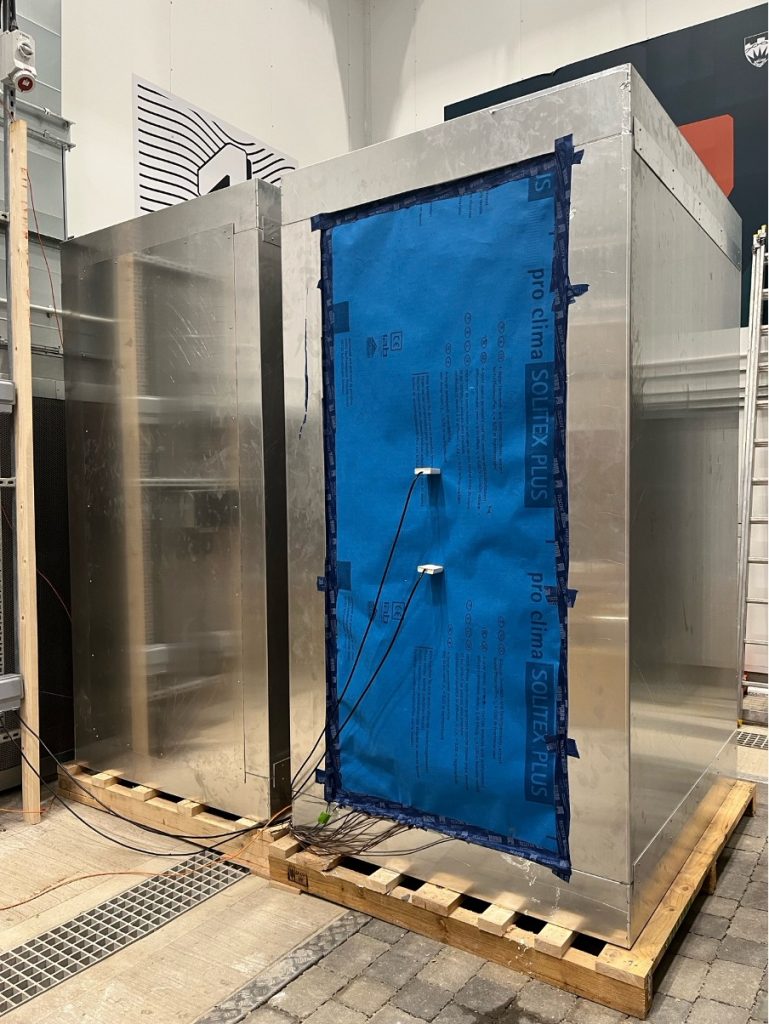
Within our lab we have two bespoke, heavily instrumented test cells with near-adiabatic envelopes, designed to isolate and measure how individual materials and wall buildups really perform.
- Test Cell A is insulated with 200 mm of thermal insulation on five sides, with the sixth (front) face fitted with the material or composite wall buildup under investigation.
- Test Cell B is insulated with 200 mm on all six sides and acts as a control, so any difference in behaviour between the two cells can be attributed directly to the test specimen.
Both cells operate inside Energy House 2.0, where we can precisely control ambient temperature from -23.5 °C to +51 °C, regulate relative humidity, and apply solar radiation, wind, rain and snow. This lets us subject materials to realistic and extreme climate scenarios on demand, monitor how conditions inside the cells respond to changes outside, and rapidly characterise materials that conventional simulation tools struggle with.
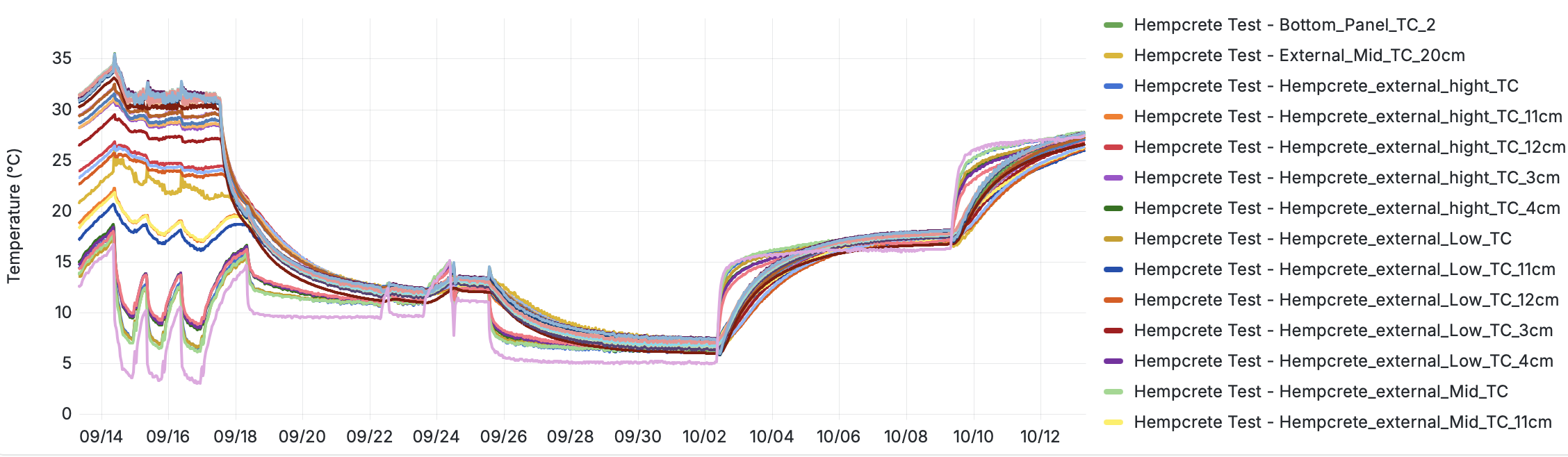
Hemp-lime bio-composite, also known as hempcrete, is a good example. Its combined heat and moisture buffering makes it notoriously difficult to model, which often leads to a significant performance gap between how a building is designed to perform and how it performs once built. By testing materials like this under controlled, repeatable conditions, we generate the data clients need to calibrate and prototype their models.
Further publications can be found on the Energy House Labs Research Repository