DESNZ Demonstration of Energy Efficiency Potential (DEEP)
Impact of Fabric Retrofit on Gas Central Heating System Performance
The efficiency of the Energy House’s gas central heating system was measured at each
stage of a whole-house fabric retrofit to investigate the impact of performing a fabric
retrofit without any modification to an existing heating system.
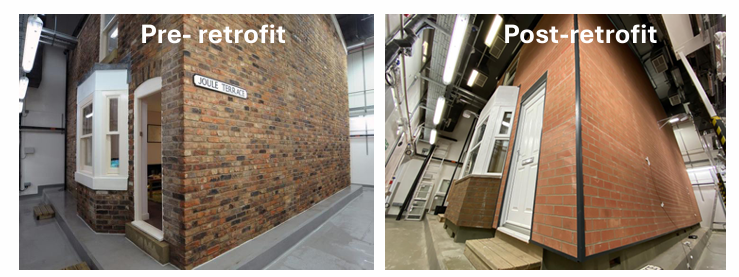
Radiators were left unchanged throughout the fabric retrofit process, which ultimately
delivered a 51% reduction in the heat transfer coefficient (whole-house heat loss) of the
Energy House. At each stage of the retrofit, tests were performed with both a traditional
Class I (on/off) and a modern Class V (modulating) boiler controller
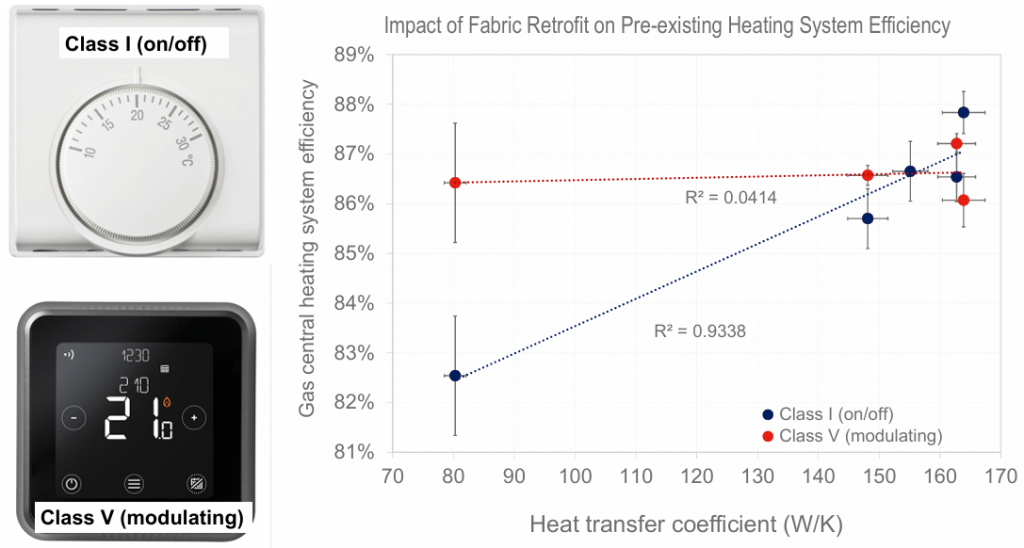
With a Class I controller, heating system efficiency decreased by 5% following the whole-house retrofit due to oversizing of the existing radiators. System efficiency reductions were directly related to reductions in fabric heat loss. Therefore, fabric improvements may not deliver the anticipated savings in space heating energy bills if the existing heating system is not considered.
Heating system efficiency with a Class V controller remained unchanged throughout the retrofit process due to the controller reducing the boiler flow temperature. Modulating controls may therefore provide a lower-cost alternative to replacing radiators following fabric retrofit.
For boilers incompatible with a modulating controller, manually reducing the boiler flow temperature to match post-retrofit heat demand was shown to be an effective and low-cost mitigation measure.