National Energy Action Energy House Tests
Impact of Lowering the Setpoint of a Gas Boiler Thermostat
National Energy Action commissioned tests at the Energy House to investigate the impact of households in hard to treat (HTT) homes attempting to reduce their winter space heating energy costs by lowering the setpoint of a central heating thermostat.
A single-zone heating system was tested, as Building Regulations permit homes with a total floor area of up to 150 m² to be controlled by a single thermostatic boiler controller. The thermostat was located in the living room, and radiators were sized in accordance with industry guidance using design temperatures of 21 °C for the living room and 18 °C for most other rooms.
Reducing the living room thermostat setpoint lowered energy use and cost but also reduced temperatures throughout the house. Each 1 °C reduction in living room temperature reduced temperatures in other rooms by around 0.8 °C. Maintaining the living room below 21 °C resulted in most other rooms falling below the commonly recommended minimum healthy temperature of 18 °C.
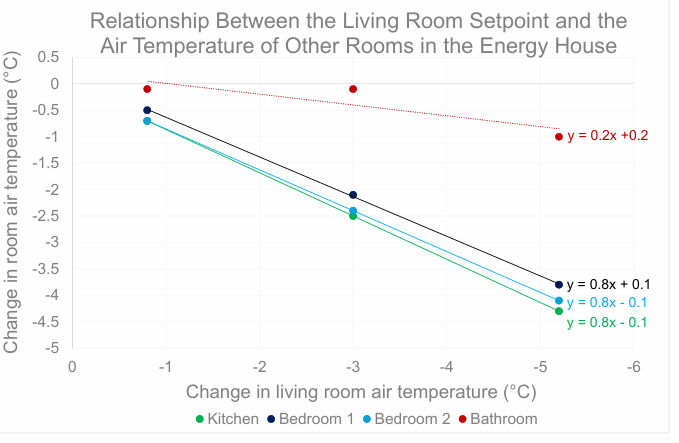
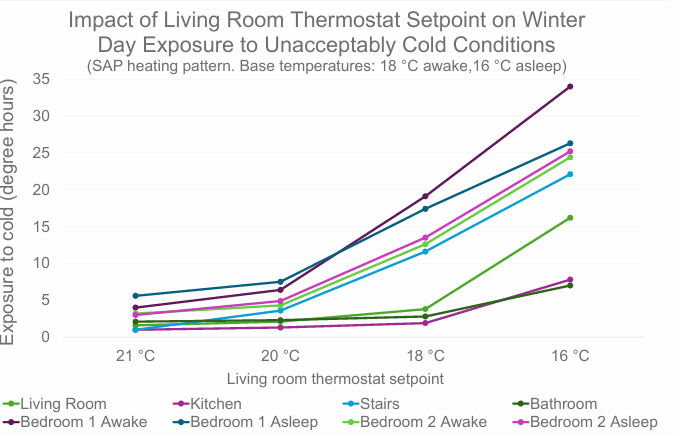
The findings suggest that reducing the setpoint of a living room thermostat below 21 °C in homes with a single-zone heating system cannot be recommended, as it may result in unhealthy temperatures elsewhere in the home. This limits opportunities for occupants of HTT homes, which are most vulnerable to fuel poverty, to safely reduce energy costs.
Based on the findings from the tests it is recommended that additional heating zones should be provided in new and existing dwellings. The tests demonstrated that retrofitting Class VIII multizone heating controls enables individual rooms to be heated independently to safe minimum temperatures, potentially allowing occupants to reduce space heating energy costs by more closely aligning heating provision with periods of room occupancy.